The Power of Illustrated Poetry for Early Readers
I liked poetry as a kid. I assure you, that was not universal. In school, we would read poetry aloud, which is probably – all things considered – the very best way to build both confidence and vocabulary in children, maybe in everyone. But most of my classmates hated this exercise. I relished in it.
In school, the focus was on the 'great' poets. We would read plenty of Emmerson, Frost, etc. And I admit, they are great. But they didn't connect with me the way others did.
One of my favorite books from my childhood was Somebody Else's Nut Tree by Ruth Krauss. I wore it out. Later, I realized that my love for this book might have also partially been because it was illustrated by Maurice Sendak, who wrote another book that has always been close to my heart, Where the Wild Things Are. Another reason I probably loved Somebody Else's Nut Tree is because it was really just a celebration of children and the rampant creativity kids have, something to which I could relate. It was a fantastic grouping of work that I encourage everyone to find and share. The word 'whimsy' comes to mind.
But the poet that reached me the most was Shel Silverstein. Hands-down.
Shel's books were fun, goofy and heartfelt and yep – there's that 'whimsy' again. A combination of feelings that generations of readers have now been able to absorb and enjoy. The writing was brilliant. I often think of Shel Silverstein and Jimmy Buffett as the two greatest poets of my lifetime. And while Jimmy's poetry came forth primarily in song, Shel's poetry and other writing came forth in many forms, including both songs and print.
The year I was born, Shel won a Grammy for just such a song. It's likely you may have heard of it – A Boy Named Sue, made famous by Johnny Cash.
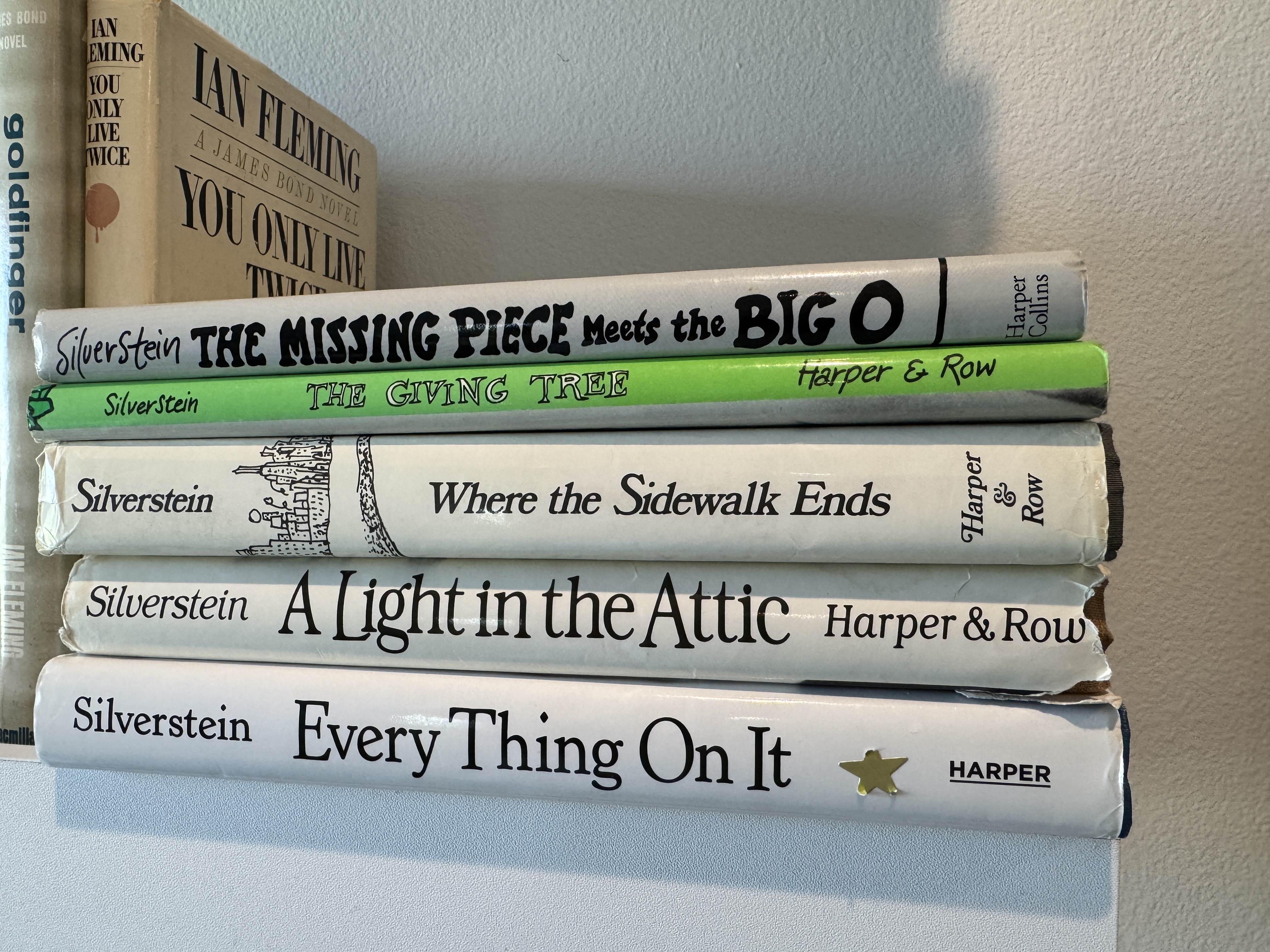
Where the Sidewalk Ends was famous among my generation. And I loved every poem in it. Memorized many of them. 'Ickle Me, Pickle Me, Tickle Me, Too' was probably my favorite. As I sat here writing this, I attempted to recall it – came quite close.
And Shel illustrated his poetry. Images drawn with the same fun and – here it is yet again – 'whimsy' that perfectly reflected the written works themselves.
Poetry by itself is beautiful but I think when it is illustrated poetry, it becomes magical. This is, I think of particular importance with children, because the images can provide a better context for what are sometimes more complex ideas. The pictures and drawings bring about a greater understanding of the words and that, as I have said already, boosts vocabulary. I think we can agree that anything that boosts literacy development in children is a plus without sliding unnecessarily into the adult world. There's plenty of time for that later.
It's clear the illustrations of Shel Silverstein are cartoons. At least, I call them that. It is a major part of their appeal to me that they come off as scribbles or doodles. But they do not lose meaning for being 'basic' or 'simple'. You could definitely argue they are neither.
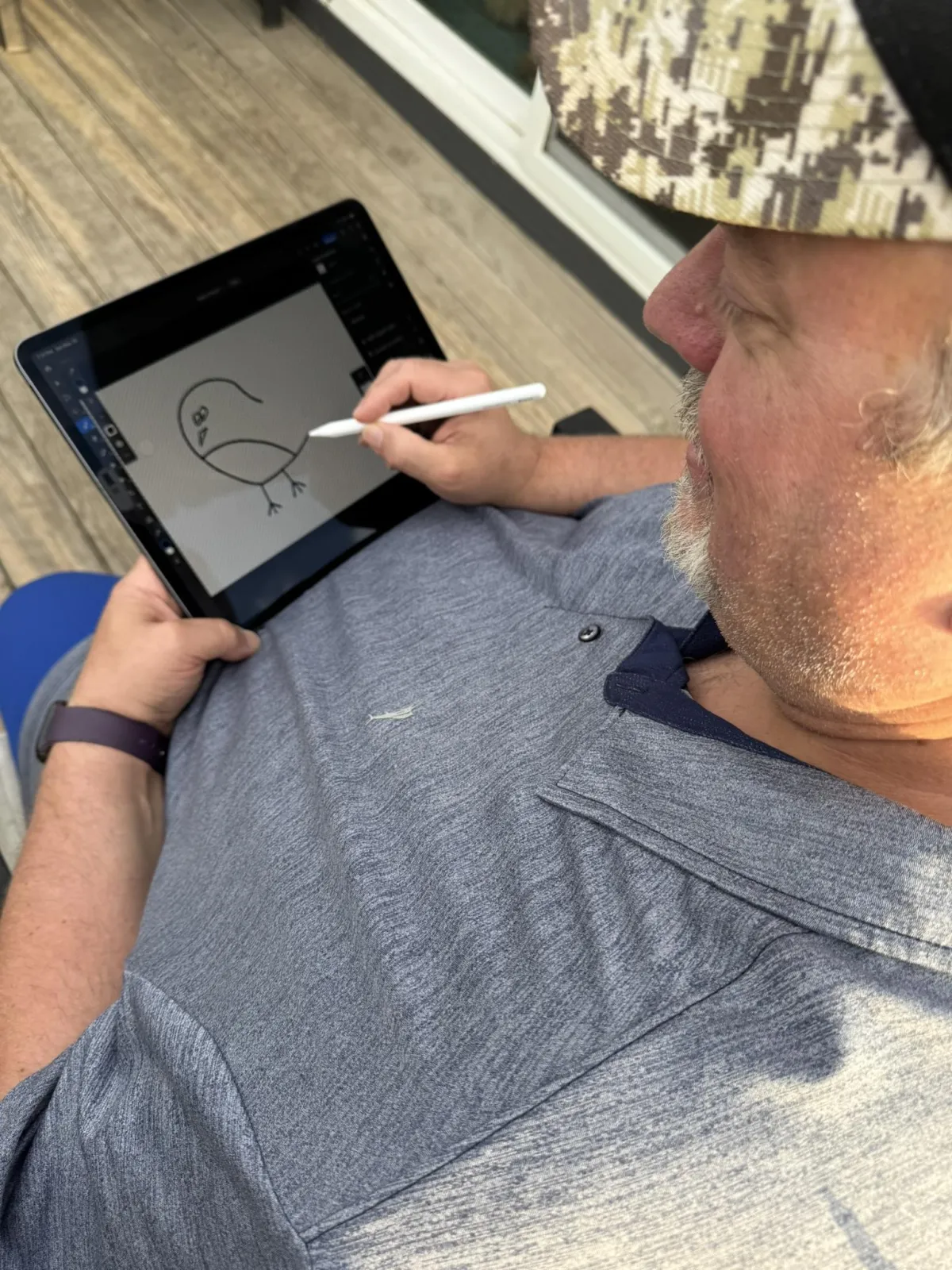
The primary character of The Robin and the Rainbow began as a doodle with inspiration from Shel. I honed it a bit, but the final version you see in the book is essentially what I came up with that day I first put pen to paper. And while our robin friend seems basic, I think to have made her or any of my characters more complex would have taken away from the story.
And while I'm at it, I also chose the simplicity of black and white for the same reason. Does color appear at times? Yes. But with specific meaning.
There are a lot of children's poetry books, actually. Some have illustrations and some do not. Think for a moment – are the ones with pictures more engaging? Do you feel differently about this as an adult vs what a child might think? I can guarantee kids like poetry with pictures. And I do, too.
It is my hope that the Faith Critters series will certainly be fun and maybe will even have a little dose of whimsy from time-to-time. But that it will also provide an easy pathway to larger concepts like the power of prayer and the connection we have with God.
JF
Meet the robin who started it all in The Robin and the Rainbow — you can find her here The second book in the Faith Critters series, The Turtle and the Treehouse is also available now, right here. To follow the journey as new stories come to life, Join the Flock here